We may earn a referral commission from some links on this page. It doesn't change your price or our recommendations.
DockStar Smart Thruster review: what you get, who it suits
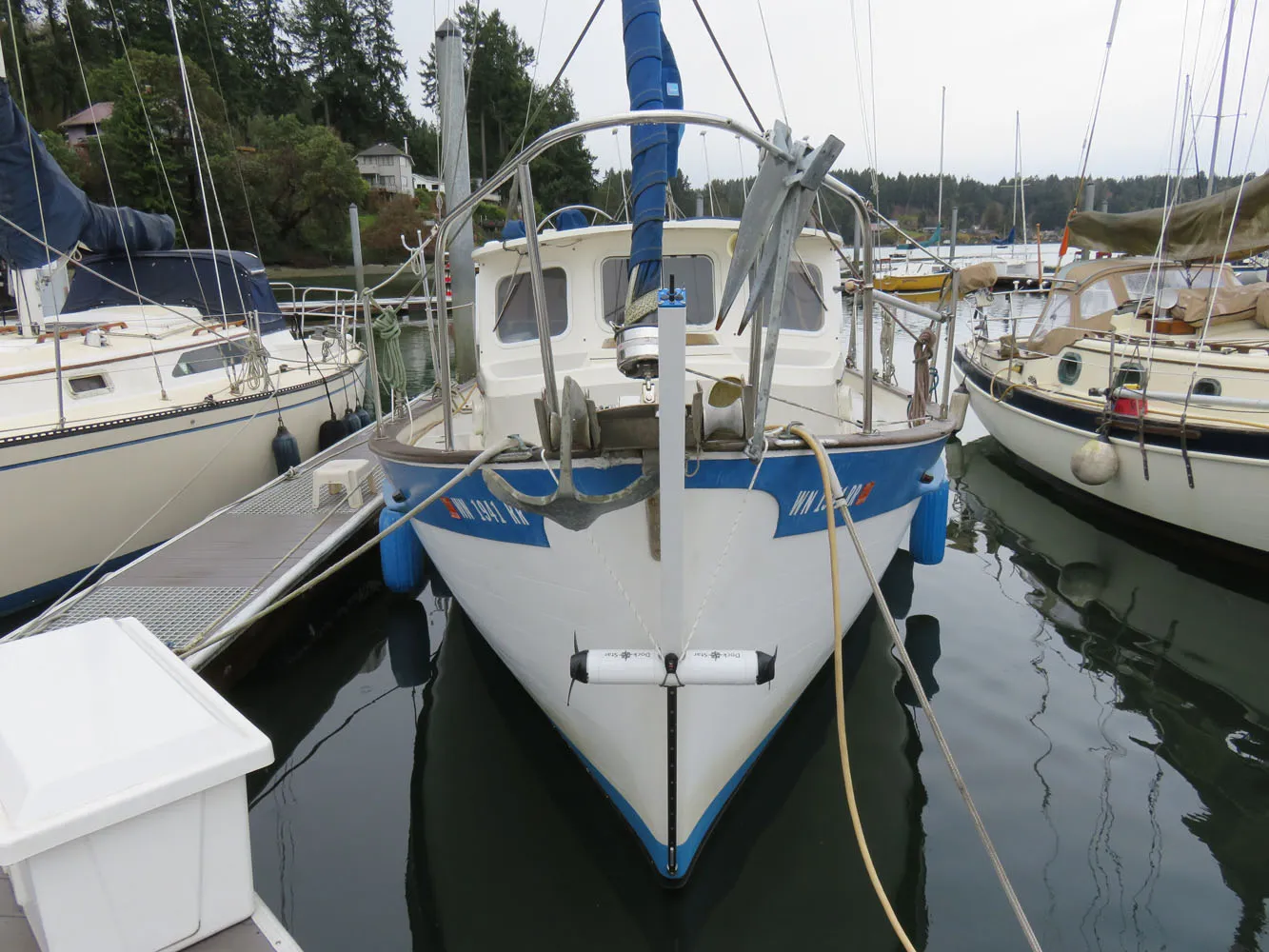
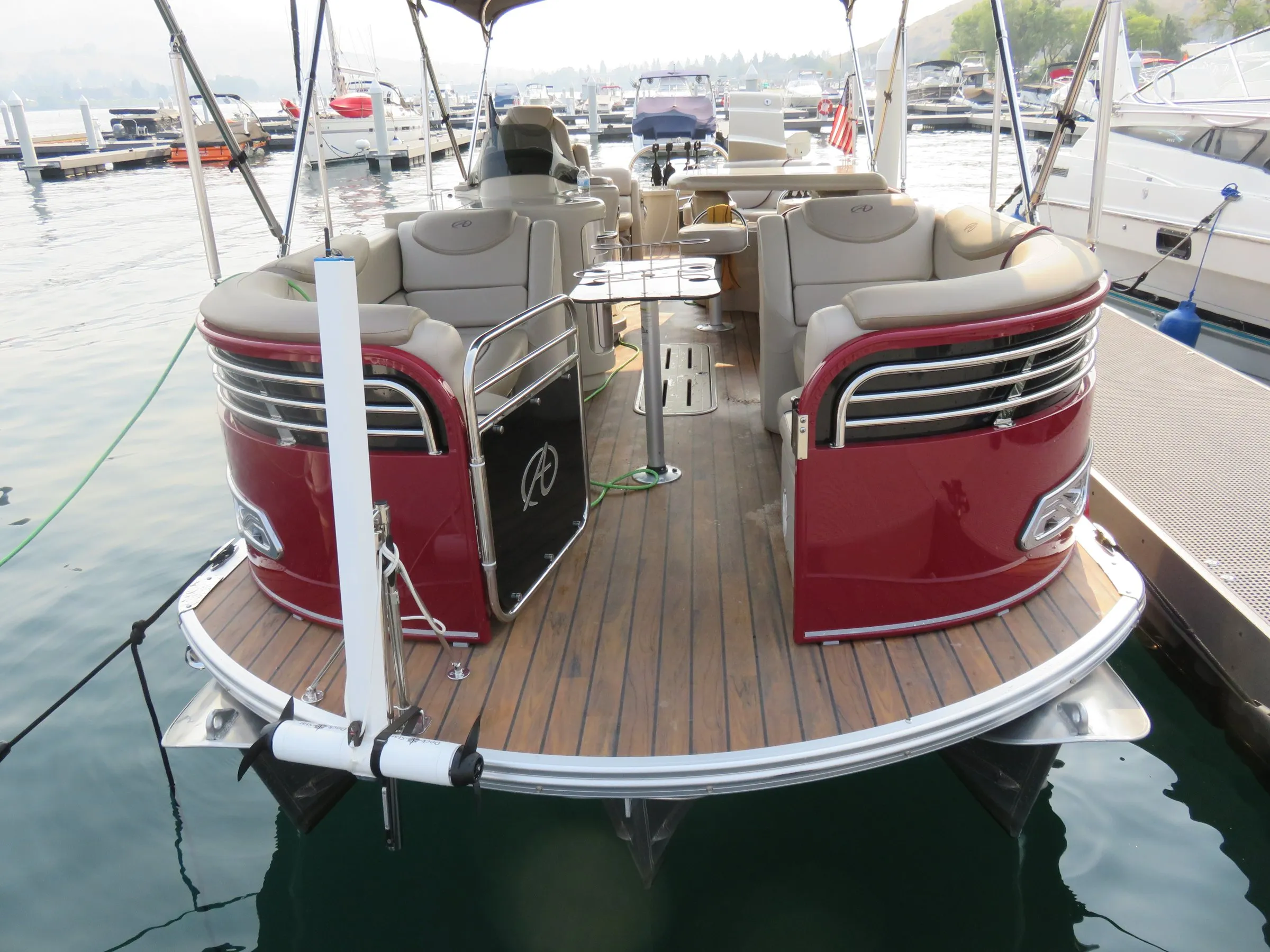
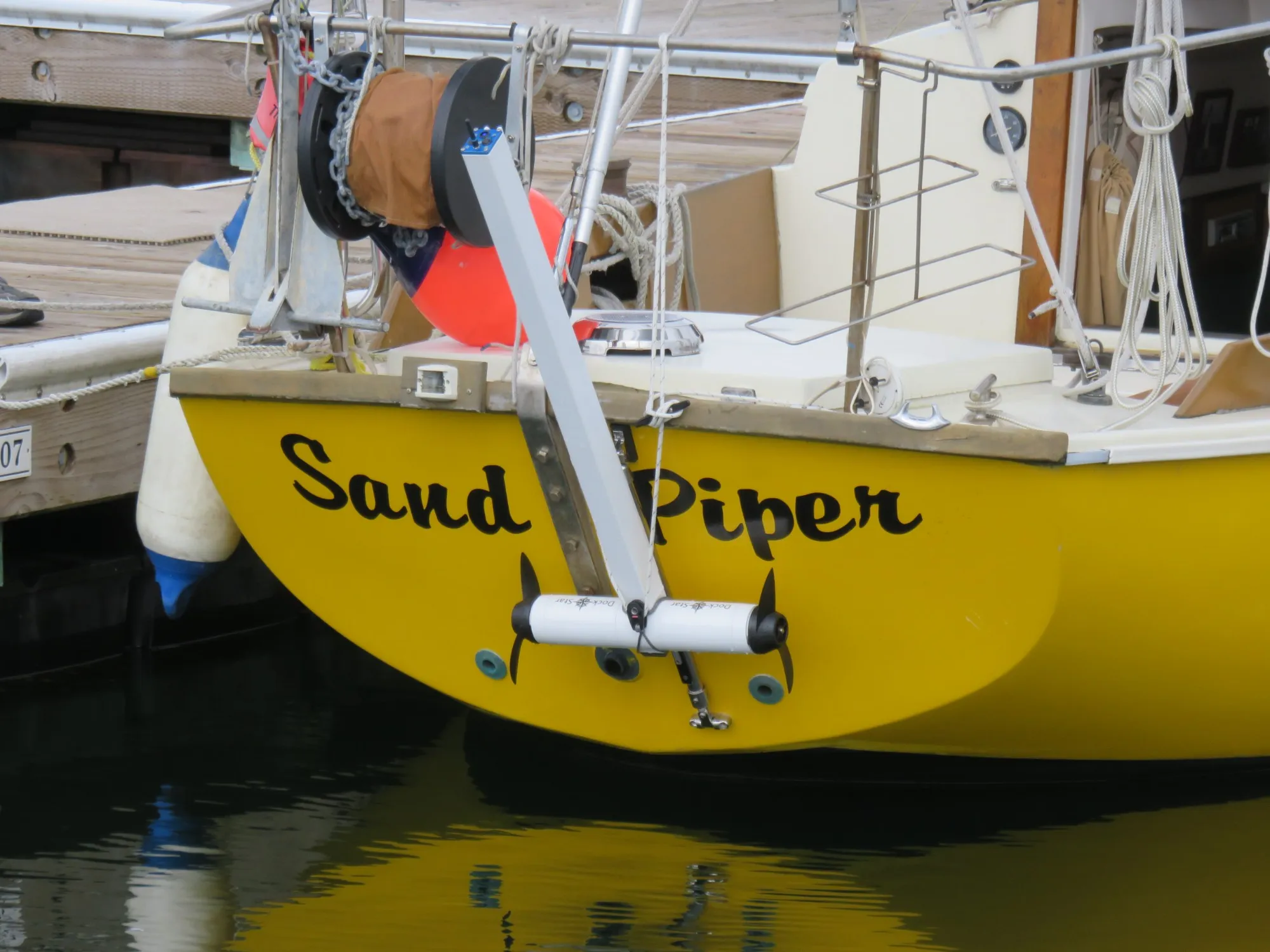
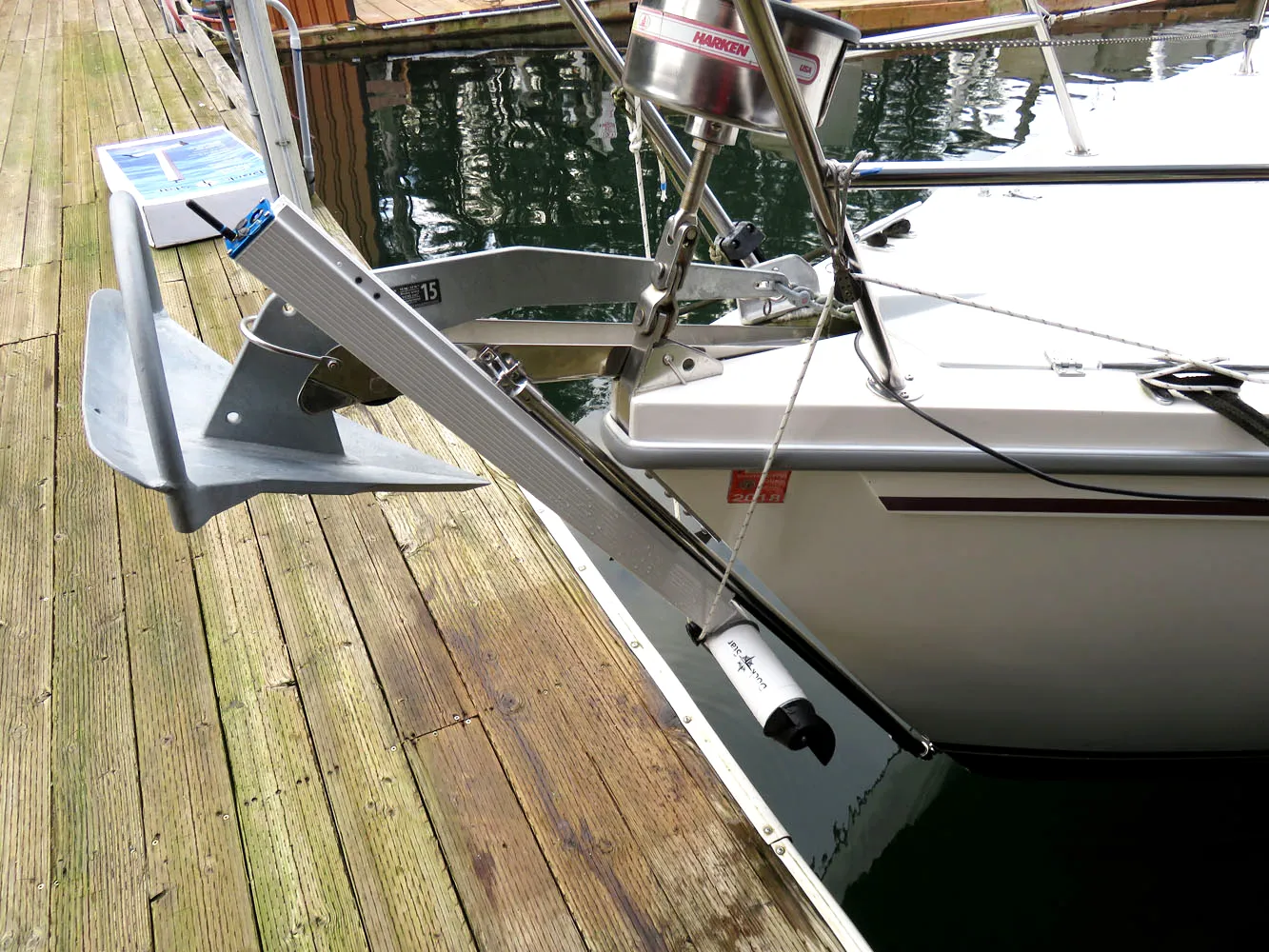
The DockStar rides on a rail on the deck or the The flat surface across the very back of the boat. and runs off its own battery. You lower it into the water to dock or leave the dock, then lift it clear on the rail with a rope and pulley once you are underway.
It is one of only two mounting categories that puts no hole below your waterline and needs no Lifting the boat out of the water on a travel lift or a trailer so work can be done below the waterline. It is billed separately from the job itself.. This review sets out what DockStar publishes, what owners report, and how far one unit or two goes on your boat.
How this review was made. From the documents and from owners. We read every page DockStar publishes, most recently on 23 September 2026, along with their user manual and installation guides (bow, stern, pontoon and the bottom-deck pontoon mount sheet), all on their manuals page. Owner reports come from Trawler Forum threads from 2018 and 2022. Where two of DockStar's own documents disagree, you get both figures.
One disclosure that matters more than the usual one. I fitted a second-generation Smart Thruster at the stern of my own 41 ft trawler in the summer of 2026, and I like it. So I have handled the thing, and I am not a neutral party. One boat is one data point: the strengths and limitations below come from the documents and from other owners, and you should weigh my enthusiasm with that in mind.
The short answer
An external thruster on a rail at the bow or on the transom. It carries its own battery, so there is no boat wiring.
On a trawler, one unit gives all the thrust a 15 knot breeze asks for, up to about 44 ft. That figure comes from our size calculator, the tool here that works out the thrust a boat needs. Two units, one at each end, do that to about 50 ft.
Out at the very ends of the boat it works on a longer lever than a tunnel can. One 90 lb unit at the transom comes close to a 150 lb tunnel at the bow.
Each one is custom made for the boat, so there is no generic way to buy one yet. In a real breeze one unit can run short: the owner of a 34 ft CHB with a full The open upper helm on top of a motor yacht or trawler. It adds a lot of height for the wind to push on. found one not enough in wind. Each charge gives ten minutes of running.
DockStar's prices come to $4,270 for one unit on a stern track and $8,650 for a bow and stern pair, before shipping and tax. A boatyard-installed tunnel on a 35 ft boat runs $10,100–$14,200 for one end.
Photos and videos
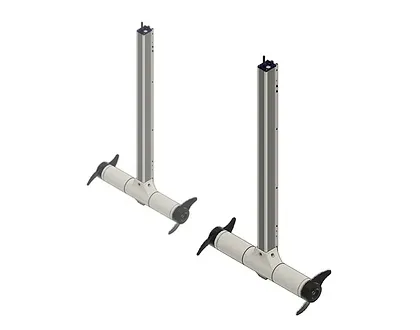
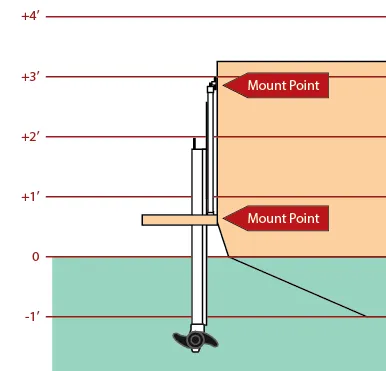
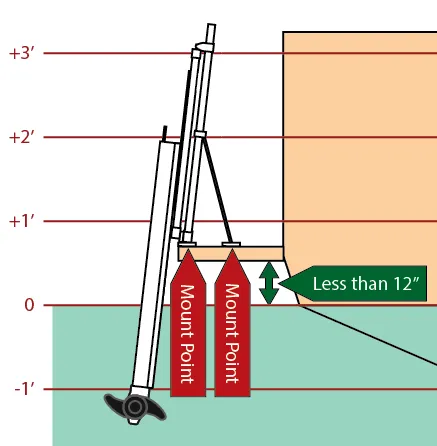
These are DockStar’s own pictures and two of its own videos. They show the unit, where it sits on a boat, and how the track fastens.
What DockStar publishes
DockStar sells one thruster, on a track made for the end of the boat it goes on. Here is every way this site lists it, at DockStar’s own prices. Each price is the complete system, unit and track. Click a model to open its card.
| Model | End | Thrust | Price |
|---|---|---|---|
 DockStar Smart Thruster, bow
The maker’s own listing, read 23 September 2026. Full page: fit, cost and wiring | Bow | 90 lb, second generation | $4,380 to $4,500 |
| Stern | 90 lb, second generation | $4,270 to $4,570 | |
| Bow and stern, two units | 90 lb at each end, never summed | $8,650 to $9,070 | |
 DockStar Smart Thruster with pontoon track
The maker’s own listing, read 17 September 2026. Full page: fit, cost and wiring | Bow, on a pontoon deck | 90 lb, second generation | $4,570 |
DockStar’s published specification for the unit itself:
| Spec | Published | Note |
|---|---|---|
| Thrust | 90 lb | Consistent |
| Motor | 1008 W, 1.35 hp, two 42 A 12 V motors | Consistent |
| Runtime | 10 minutes per charge | Consistent |
| Battery | Lithium, 12.8 V 15 Ah, over 2,500 cycles | Internal; your The batteries that run the boat’s lights, fridge and electronics, as distinct from the engine’s starting battery. They are built for a slow, steady draw. is untouched |
| Charge time | 5 hours from empty | Consistent |
| Weight | 27.1 lb | Consistent |
| Install time | 1–2 hours, DIY | Their About page says 2–3 |
| Boat size | Manual: recreational boats 20 to 50 ft, with no sizing within that range. Pontoon track page: 20 to 30 ft. | Our calculator on a trawler: one unit to about 44 ft, two to about 50 |
Where two of their figures differ, work from their current spec.
Two units, and why the ends matter
Turning a boat takes Turning effort, measured in pound-feet. It is the force multiplied by how far that force sits from the point the boat turns about. A small push a long way out beats a big push near the middle.. That is thrust multiplied by how far the thrust sits from the point she pivots about.
A A tube bored straight through the hull below the waterline, with a propeller in the middle of it. It is the conventional thruster. Fitting one is mostly a labor job rather than a hardware one. has to go where there is enough hull to take a tube. On a 40 ft boat the nearest it can usually sit is about 6 ft back from the bow.
An external unit can sit almost at the bow itself, or right on the The flat surface across the very back of the boat..
That extra reach does real work. One 90 lb unit at the transom comes close to a 150 lb tunnel at the bow. It gets there on a little over half the push, because it works on a longer The distance from the point the boat turns about to the place the push is applied. Double the distance and the same push turns the boat twice as hard..
That is what makes a pair interesting. Buy two units, one at the bow and one at the stern. The remote that ships with every unit already runs both, even when the second is added years later. With one at each end you can:
Turn her in place. Push the bow one way and the stern the other, which is a Two equal pushes in opposite directions, one at each end of the boat. A couple spins the boat about her middle without shoving her sideways. The further apart the two pushes sit, the harder the boat spins, which is why moving a thruster further from the middle does more than making it stronger., and she rotates about her middle.
Move her sideways. Push both ends the same way.
A single tunnel thruster at the bow can do neither. Our page on bow and stern thrusters together shows those moves from above and prices every route to a pair.
Here is that comparison, with every distance marked on the drawing.
One 90 lb unit at the stern comes close to a 150 lb tunnel at the bow. It has little more than half the push, but it sits on a longer lever. Run both together and the pair produces about 67% more turning moment than the tunnel.
The pair figure needs no assumption about where the boat turns. Two equal, opposite pushes at different points make what engineers call a couple, and a couple turns the boat equally hard whatever point you measure from. It is simply 90 lb across the 39 ft between the two units: 3,510 lb·ft, the same figure the bars above reach by adding two lever arms. Move the center of rotation anywhere you like and that number does not move.
A 40 ft boat, stopped, turning about her middle. Bow unit 1 ft back from the bow, stern unit on a transom track. Tunnel 6 ft back from the bow, which is far forward for a tunnel and favors the tunnel here. The tunnel's figure depends on where the boat turns, so the comparison does too. A boat with headway turns about a point further forward, which shortens the tunnel's lever and lengthens the stern unit's, so the stopped boat is the case that favors the tunnel most. The 90 lb is DockStar's published figure. The 150 lb tunnel is the size DockStar's own page compares itself against, a worked example with no maker's model behind it. Neither figure is reduced for losses.
The drawing shows turning only. A tunnel still gives better direct sideways push, and it stays under water more consistently. It is probably better at pushing the bow sideways against a hard breeze. Turning is only one of the things you will ask a thruster to do.
The fairest summary of this product we have read comes from an owner:
“the DockStar passes the sniff test. It clearly has tradeoffs like anything else, but I think it deserves consideration as a useful tool for rotational control and low-speed maneuvering without cutting large holes in the hull. I don't think it overrides the laws of physics or replaces seamanship.”
Trawler owner, Trawler Forum, May 2022
He is right about the physics. The wind's push on your The sides of the hull above the water. rises with the square of wind speed. Twenty knots is four times the force of ten, and thirty knots is nine times.
On a bad enough day no thruster of any kind will get you in. The useful question is what wind you actually dock in.
Strengths and limitations
What holds up
- Fastener holes only. There is no tunnel, no hole below the waterline and no haul-out to fit it. Only one other mounting category can say that.
- Nothing permanent is done to a hull you may want to sell. The rail bolts on above the waterline, and the unit can come off it if you ever need it to.
- The battery is inside the unit, so there is no boat wiring, no cable run and no charger to fit, and it draws nothing from your house bank.
- The same unit works at either end, and the remote that ships with every unit already drives two: top four buttons bow, bottom four stern.
- "All the hardware is SS… The mounting system is very robust."
- A bow and stern pair costs $8,650 for both ends of the boat, which is less than one boatyard-fitted tunnel thruster at one end.
What does not
- It lives on a rail, and you lower it and raise it by hand every time: down for docking and leaving the dock, up out of the water on a rope and pulley once you are underway.
- Every unit is custom made for the boat it goes on. There is currently no generic, off-the-shelf way to buy one.
- "We like the dockstar on calmer days, but if you get in any sort of wind it will not be enough."
- The same owner's size verdict: "For a 26ft boat its perfect but id say 32 ft and bigger you need more."
- "You will have to remove them each time you dock or someone will just remove them for you." Theft was raised in 2018 and DockStar sells no lock or security accessory.
- Ten minutes of running per charge, and five hours to recharge from empty.
- Three knots maximum while deployed. It does not suit a fast V-hull that cannot raise it clear, and bow installations are for displacement hulls only.
- The manual gives 20 to 50 ft as the intended use, no sizing within it, and no wind figure beyond "not designed for strong current or heavy wind control". Our calculator sizes a thruster to keep steering in a 15 knot breeze. On a trawler one unit gives all of that thrust to about 44 ft, and still helps to about 55 ft. Two units, one at each end, give all of it to about 50 ft.
- There is no dealer or installer network. The install is yours or a yard of your own choosing.
- Owners raised anchor fouling on a bow install in 2018, and we could find no published answer to it.
- Returns carry a 20% restocking fee and you pay return shipping.
Who it is for
DockStar's own answer is a fair one. They name "Old Salts keeping their independence as time takes its toll", solo captains, sailboat racers, and "boat owners who never thought thrusters were 'for boats like mine'".
They publish no sizing by length within their range. So we size it on the turning effort a boat needs to keep steering in a 15 knot breeze.
Good fit if
Your trawler is up to about 44 ft. One 90 lb unit, usually at the stern, gives all the thrust our calculator says she needs in a 15 knot breeze. It still helps to about 55 ft.
You dock in a sheltered slip. A single unit suits that.
You already have a A tube bored straight through the hull below the waterline, with a propeller in the middle of it. It is the conventional thruster. Fitting one is mostly a labor job rather than a hardware one. at the bow and lack stern control.
Your trawler is longer, and you fit two. Past about 44 ft a trawler wants one unit at each end. The pair gives the whole figure to about 50 ft.
You sail. Sailboats suit it well because it lifts clear of the water under sail, and it can come off the rail for race day.
Look elsewhere if
You plan on one unit for a heavy boat with a lot of The area of the boat the wind can push on: the hull sides, the cabin, the mast and rigging, or the canopy. A tall, boxy boat has a lot of it, and wind force does not care how slowly you are moving. in an exposed slip. One unit will not do. The owner of the 34 ft CHB quoted above said so from experience, and the arithmetic about lever arms does not change it.
You run a fast V-hull that cannot raise it clear. DockStar allows three knots at most while it is deployed, and bow installations are for A hull that pushes through the water rather than climbing on top of it. Most sailboats and the heaviest trawlers have one, and they carry a lot of weight for their length. only.
I run a single stern unit on my own 41 ft trawler. It helps a great deal, and it is not enough with a strong wind on the bow, which is the case the pair exists for.
What it costs
| Configuration | Cost | Covers |
|---|---|---|
| Thruster alone | $3,950 | Needs a track |
| DockStar Smart Thruster, stern
The maker’s own listing, read 23 September 2026. Full page: fit, cost and wiring See it on the maker’s site | $4,270 | One end |
| DockStar Smart Thruster, bow and stern
The maker’s own listing, read 23 September 2026. Full page: fit, cost and wiring See it on the maker’s site | $8,650 | Both ends |
| A tube bored straight through the hull below the waterline, with a propeller in the middle of it. It is the conventional thruster. Fitting one is mostly a labor job rather than a hardware one. on a 35 ft boat, fitted by a yard, for contrast | $10,100–$14,200 | One end |
Tracks run from $320 to $660 depending on where the unit mounts.
A custom track is quoted individually.
Ordering happens with DockStar directly. They size the track from photographs and measurements of your boat, and you settle the order with them by phone or email.
Questions to ask before you order
Every unit is a custom build. Get these answers in writing before you pay a deposit.
Will 90 lb move my boat? Their manual gives 20 to 50 ft as the intended use and no thrust-to-weight figure. Our calculator says one unit gives a trawler all the thrust she needs in a 15 knot breeze up to about 44 ft. Bring your displacement, your How far the deck sits above the water. More freeboard means more of the boat is exposed to the wind. and your usual docking wind to the call.
What is the deposit, and what is the lead time? A deposit reserves a production slot. Neither the deposit nor the lead time is published.
What does shipping cost? Every total on their selection guide ends "+ Shipping & Sales Tax". No figure is published.
Which bow track fits? DockStar measures from the water line to the top mounting point of the T-track. The Standard bow kit is for 60 inches or under. The Extended bow kit is for 58 inches or over. Between 58 and 60 inches both kits are offered. DockStar talks the installation through with you before it takes an order, and that conversation settles which track you get.
What holds it on? Four 10-32 through-bolts, 3 in long, two at each of the track's two mount points. The bow guide ships Delrin A plate of metal or plywood on the inside of the hull or deck, under the bolts. It spreads the load over a wide area, so the bolts do not pull through the fiberglass., and the stern guide raises a backing plate under a swim step. Neither says anything about a A deck or hull built as a sandwich: two skins of fiberglass with balsa or foam between them. Bolts through it must be sealed, or water gets into the core and rots it. deck or The flat surface across the very back of the boat., so ask if yours is.
What happens if it is stolen? It is a $3,950 unit hanging on the transom in a public marina, and DockStar offers no lock.